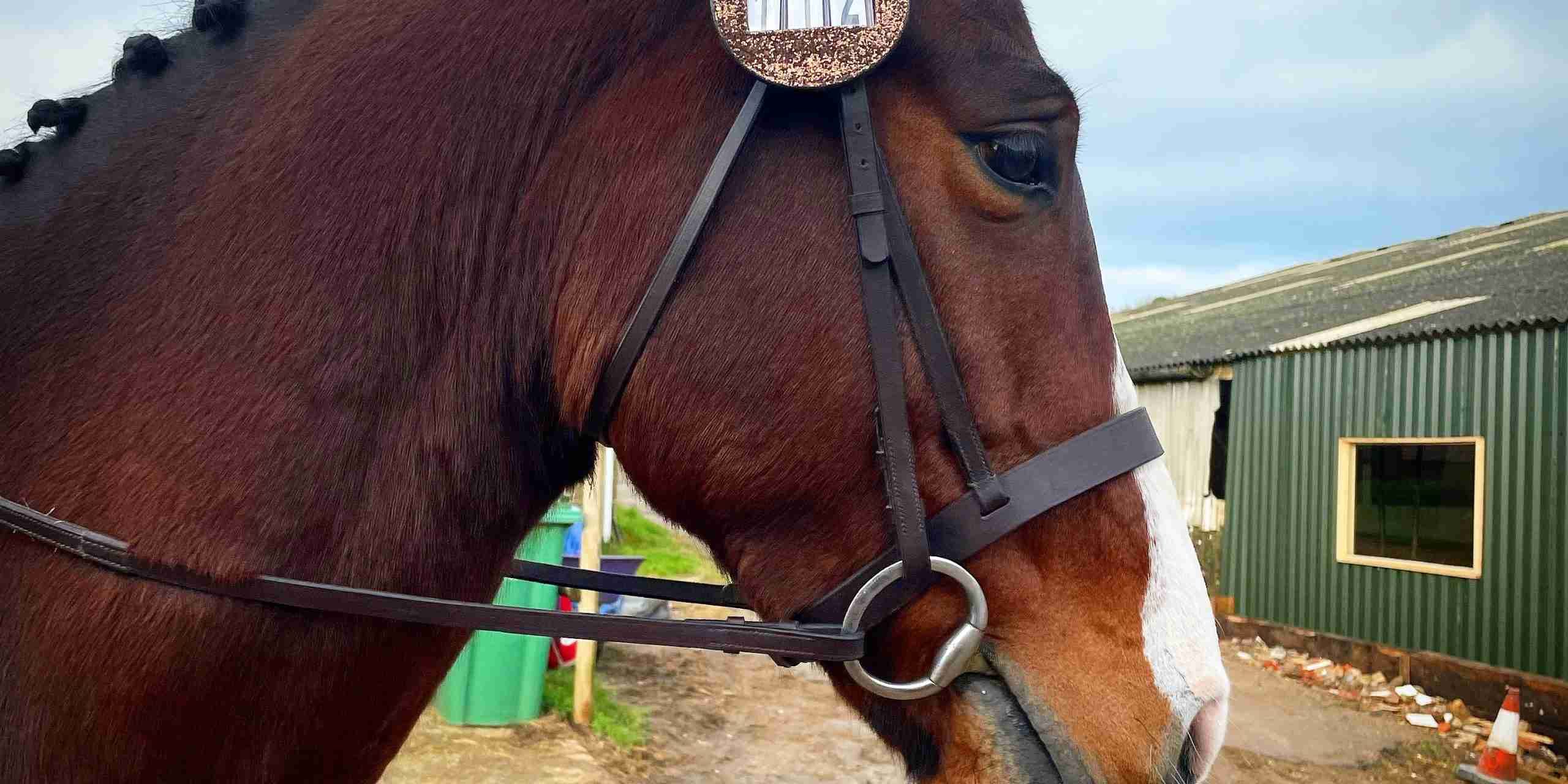
Dressage Etiquette: How to Show Your Number to the Judge Correctly
You’ve plaited up beautifully, your white breeches are somehow still clean, and you’ve memorised every movement of your test. But as you ride into the collecting ring, a small but important question crosses your mind — do you actually know how to show your number to the judge?
It sounds simple, but it’s one of those things nobody really tells you about — especially if you’re new to affiliated dressage. Getting it wrong won’t ruin your test, but getting it right shows confidence, consideration and good ring etiquette. Here’s everything you need to know.
Why Does Showing Your Number Matter?
Before your test begins, the judge’s writer needs to confirm who is entering the arena. They’ll have a sheet of competitors and times in front of them, and they need to match your number to your name before they can set up your scoresheet correctly.
If the writer can’t read your number — because it’s on the wrong side, spinning around, too small or simply not visible — it creates a stressful few seconds for everyone involved. Writers and judges are lovely people doing a busy job, and making their lives a little easier is just good manners.
As one experienced dressage writer put it: making sure your number is visible before you start is your responsibility as a competitor — and competitors are the first to complain if their sheets end up wrong.
One Number or Two?
This is one of the most commonly asked questions — and the answer depends on how you plan to show it.
Wearing Two Numbers
The safest and most considerate option is to wear one number on each side of your horse — either on both sides of the bridle or both sides of the saddle cloth. This way, the writer can read your number from whichever direction you approach, without you having to think about it at all. Many experienced competitors do this as a matter of habit.
Wearing One Number
If you’re only wearing one number, you’ll need to make sure you pass the judge’s box on the side that shows your number before your test begins. This takes a little more planning — but it’s perfectly acceptable as long as you’re mindful of it.
💡 Tip: If you’re not sure whether your show requires one or two numbers, check your schedule or contact the organiser in advance. British Eventing stipulates that numbers must be visible on both sides — so for eventing dressage, two is always the right answer.
Where Does the Number Go — Bridle or Saddle Cloth?
Both placements are widely used and accepted at most competitions. Here’s the key difference:
- Bridle — traditionally placed on the browband or cheekpiece. A classic look, particularly popular in dressage. Just be mindful that a number that’s too stiff or positioned too close to your horse’s eye can be a distraction.
- Saddle cloth — increasingly popular and often easier for the judge and writer to read, as it sits flat and stable against the horse’s side. British Dressage actually encourages saddle cloth placement where possible for improved readability.
Whichever you choose, make sure it’s secure and isn’t going to spin, flap or slide during your test. A bridle number that rotates mid-movement is both distracting and frustrating for everyone watching.
💡 Tip: LuxeEquine bridle numbers are designed to work on both the bridle and the saddle cloth — so you can choose whatever suits you and your horse best on the day.
How to Show Your Number Before Your Test
Here’s the simple process most experienced competitors follow:
- Arrive at the arena entrance in good time — ideally a few minutes before your allocated time slot.
- Ride past the judge’s box or car at a pace where your number is clearly visible. A steady trot past works well.
- Make sure the side with your number is facing the judge’s car as you go past.
- If wearing two numbers, you can simply ride in either direction — both sides are covered.
- Some competitors choose to halt briefly near the judge’s box as a courtesy — this isn’t required but is a lovely touch, especially at smaller or unaffiliated shows.
You don’t need to make a big performance of it — a calm, clear pass where your number is visible is all that’s needed. The writer will do the rest.
Should You Halt at the Judge’s Box?
This comes up a lot in dressage circles and the answer is: it’s a courtesy, not a requirement.
At smaller, local or unaffiliated shows, halting near the judge’s box for a moment is a thoughtful gesture that gives the writer time to take your number down clearly. A smile and a nod goes a long way too — judges and writers are human beings, and a friendly competitor is always appreciated.
At larger affiliated competitions where there’s a tight schedule and multiple arenas running simultaneously, a clear trot past showing your number is usually sufficient and more practical than halting. You’ll also likely be sitting on a horse that needs to be kept moving — nobody expects you to stand still on an excitable warmblood!
💡 Tip: If you’re ever unsure, err on the side of being courteous. A brief halt costs you nothing and makes the writer’s job much easier.
Common Mistakes to Avoid
- Riding past with your number on the wrong side — the writer can’t read what they can’t see.
- A number that’s spinning or upside down — check it’s secure and the right way up before you enter the collecting ring.
- Going straight into your warm-up without passing the judge’s box at all — always make sure the writer has your number before you start.
- Sharing a bridle between horses and forgetting to change the number disc — this causes real confusion for judges and officials.
- A number that’s too small or poorly contrasted — it needs to be clearly legible from a distance, not just close up.
A Note for First-Time Competitors
If this is your first dressage competition, don’t panic. Everyone was a first-timer once, and the equestrian community is genuinely supportive. The judge and writer want you to do well — their job is much easier when competitors are well-prepared, and showing your number clearly is a small but significant part of that.
Take a deep breath, ride confidently past the judge’s box, make sure your number is visible, and then focus on enjoying your test. The plaiting, the preparation and the nerves are all part of the experience — and you’ve got this.
Quick Checklist — Bridle Number Etiquette
- Number securely attached and the right way up ✓
- Placed on bridle or saddle cloth — your choice, both are fine ✓
- Visible to the judge — correct side facing the box ✓
- Two numbers worn, or one clear pass past the judge’s box ✓
- Number is legible from a distance ✓
- Spare number in your kit bag just in case ✓
Final Thoughts
Dressage etiquette doesn’t have to be intimidating. Showing your number to the judge is one of the simplest things you can do to start your test on the right note — and it takes less than thirty seconds to get right.
At LuxeEquine, our bridle numbers are designed to make competition day easier — attaching to both the bridle and the saddle cloth, so you always have the flexibility to display your number wherever works best for you and your horse.